
Serge Krush

Re-thinking Clinical Workflows for Healthcare Providers
2021-2025
Healthcare
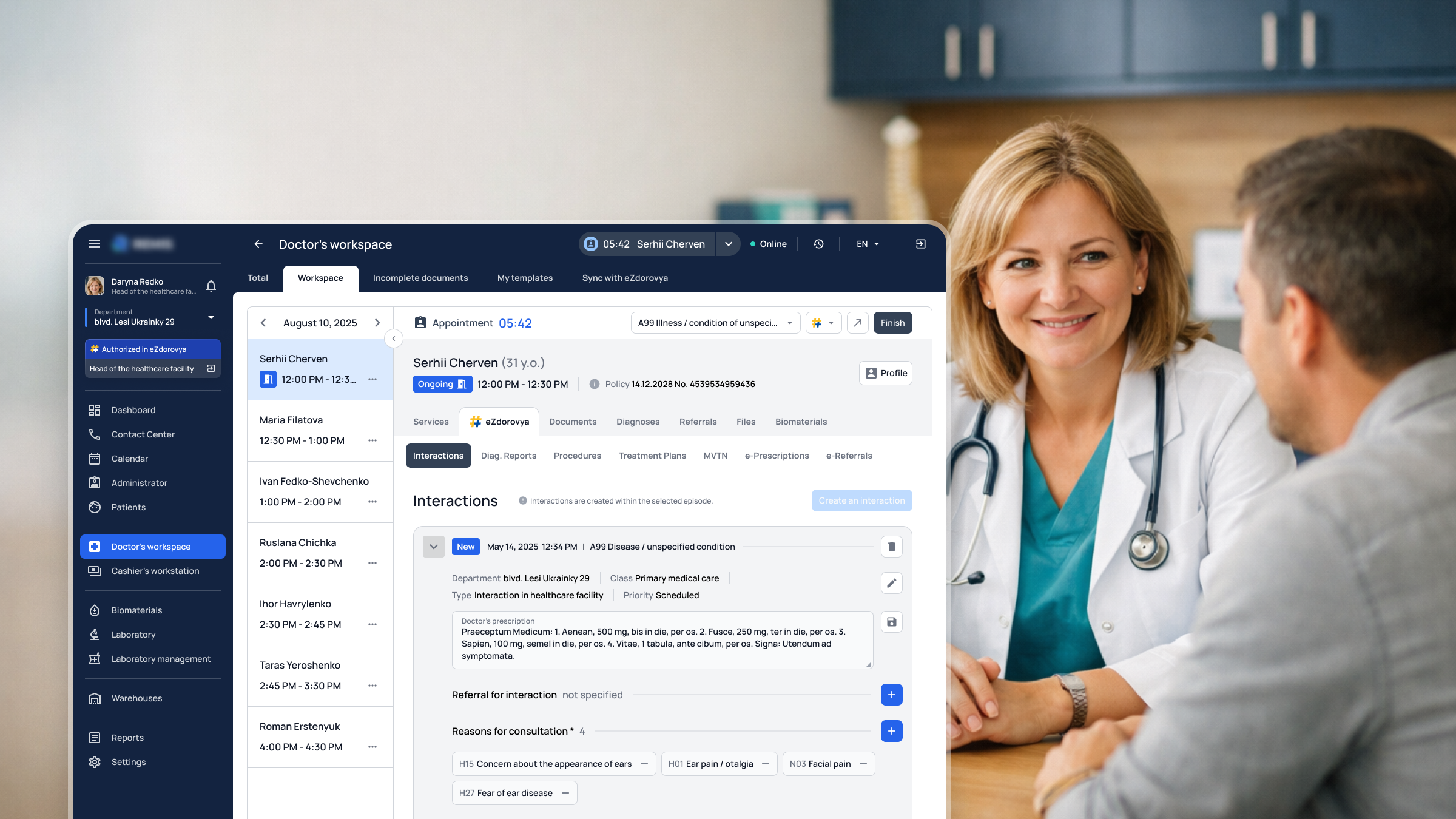
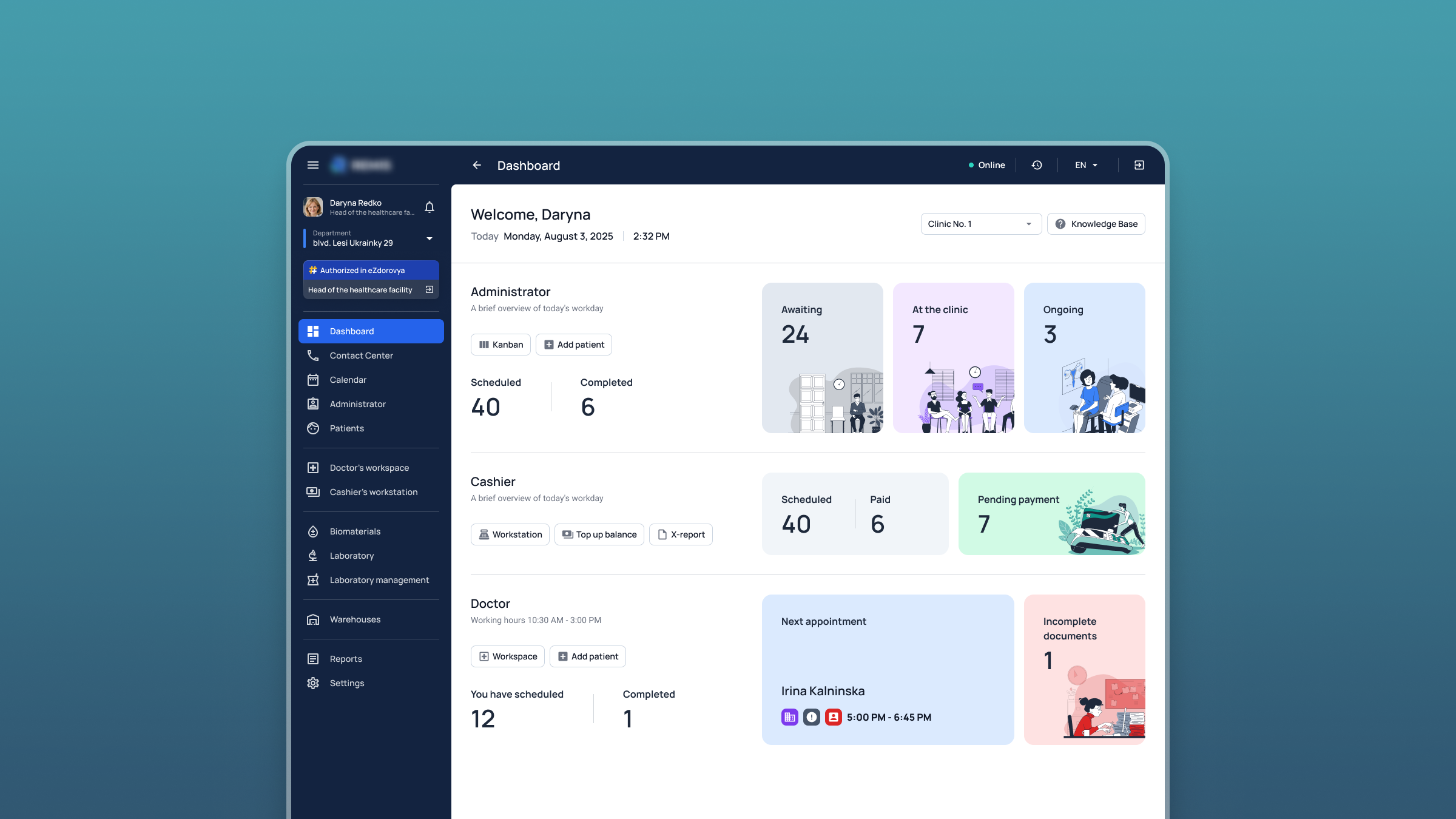
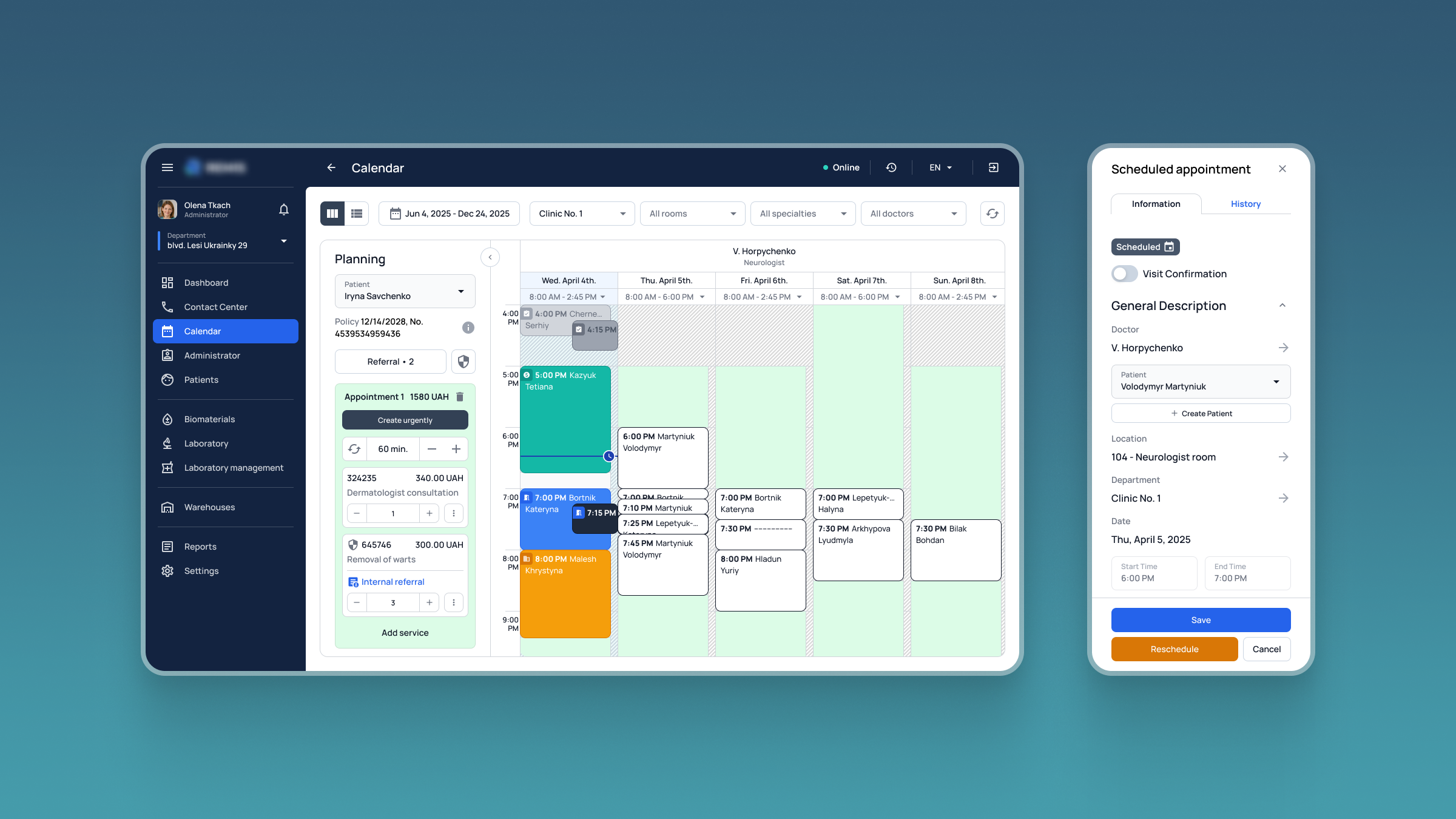
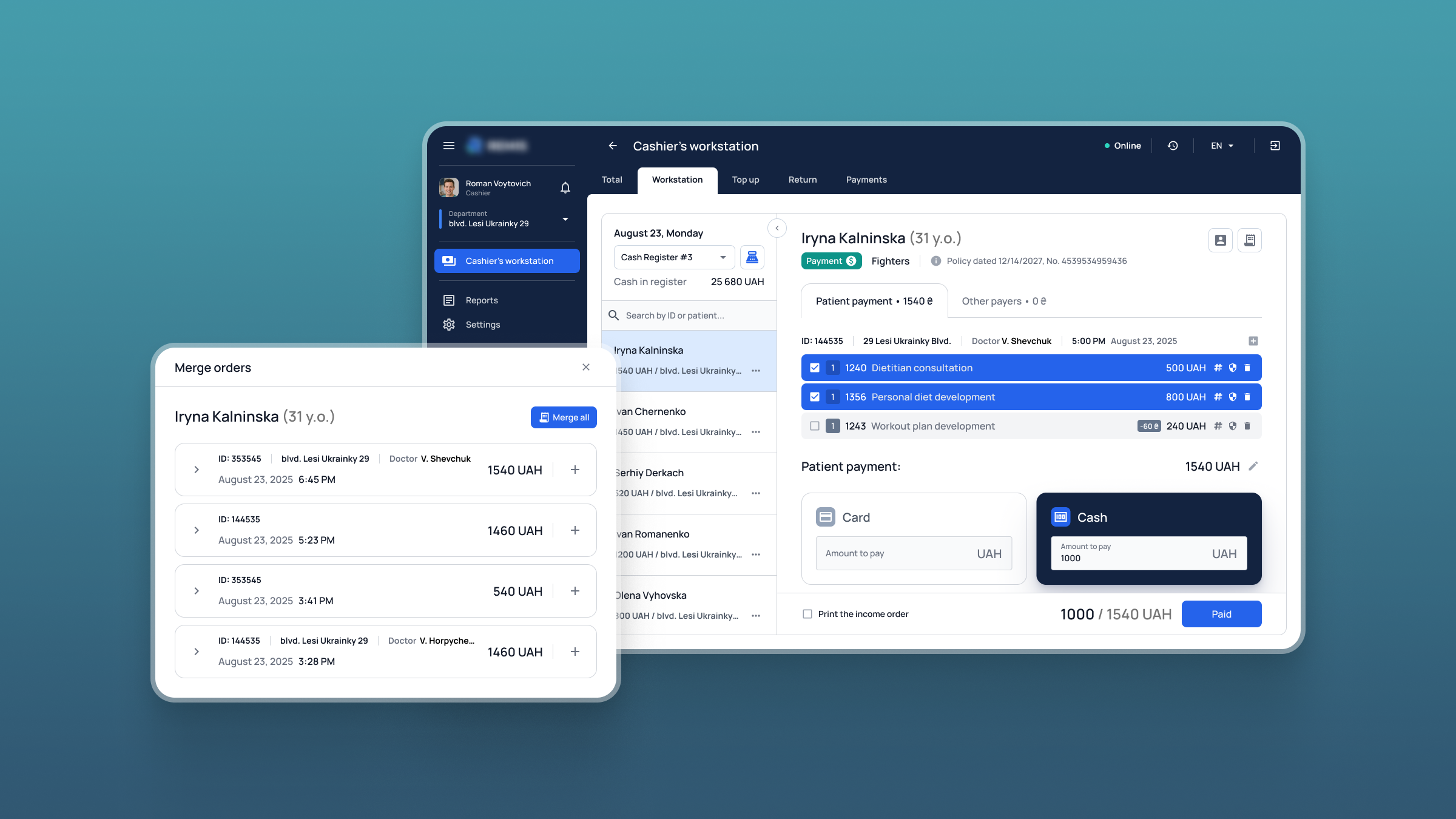
A scalable medical information system for clinics and private practices, supporting patient records, clinical workflows, scheduling, billing, and operational management.

Problem Statement
Healthcare management is deeply regulated and resistant to change, leaving clinics dependent on complex, fragmented systems that slow down daily operations and limit innovation.
Solution Overview
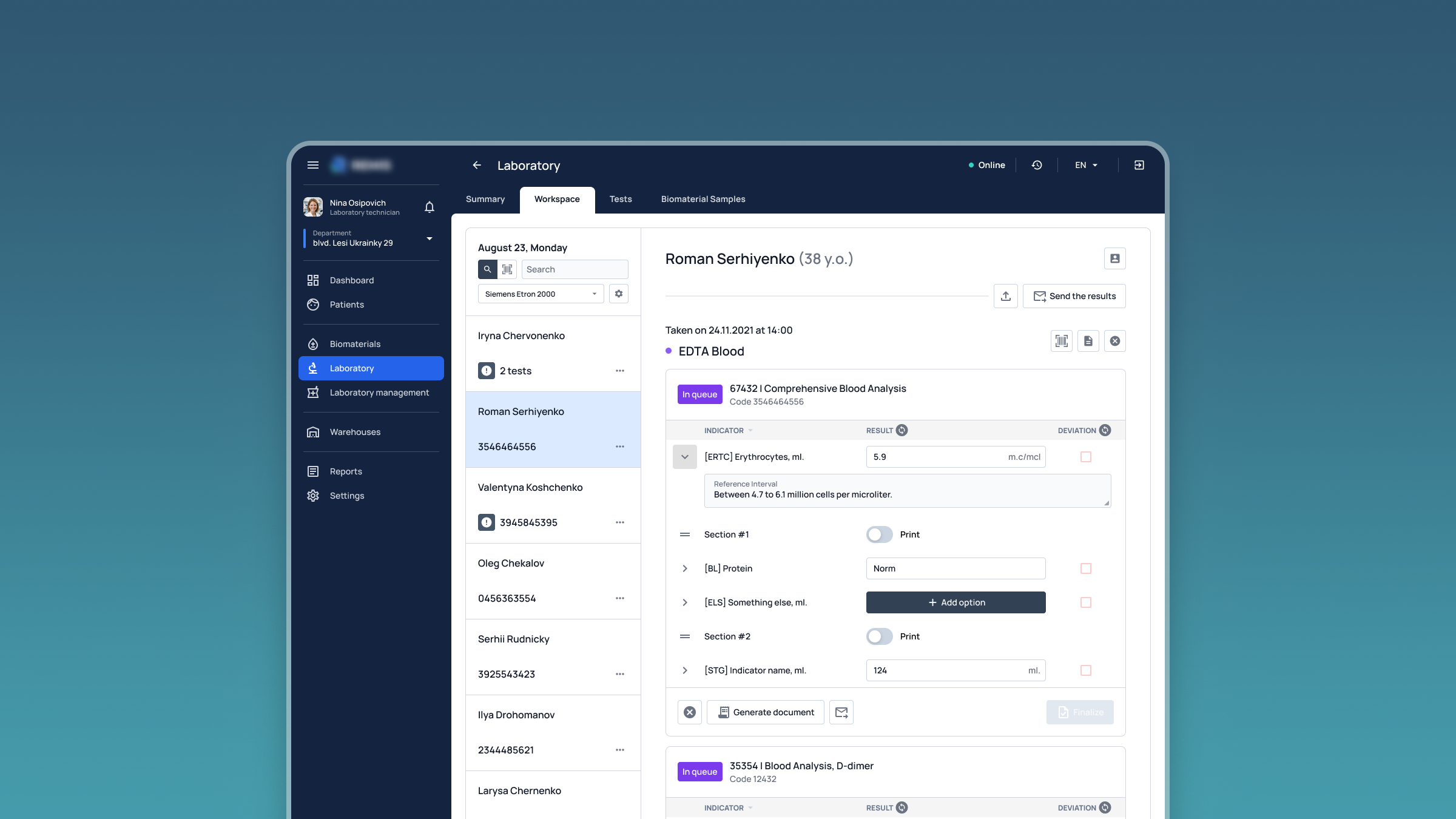
We built a flexible medical information system that modernizes clinical and administrative workflows without disrupting compliance, enabling clinics and private practices to evolve at a pace they can trust.
The system delivered measurable gains in clinic productivity by optimizing day-to-day workflows across all departments
Design process
During the design process I focused on improving complex clinical and administrative workflows within a highly regulated environment. The work was driven by close collaboration with stakeholders, deep understanding of operational constraints, iterative prototyping, and continuous validation with real clinic teams.
01 Discovery & Problem Definition
Understanding clinic operations, business goals, regulatory constraints, and the needs of different roles across the organization. This stage included stakeholder interviews, workflow audits, system analysis, and defining key operational problems to address.
02 Research & Insights
Gaining deeper insight into how doctors, administrators, and support teams interact with existing systems in real-world scenarios. Research findings were synthesized into personas, workflow maps, and friction points that informed system-level design decisions.
03 Ideation & Concepting
Exploring multiple approaches to simplify and unify complex workflows through sketches, flow diagrams, and low-fidelity concepts. The focus was on reducing cognitive load and operational overhead before moving into detailed design.
04 Information Architecture & UX Design
Structuring a large-scale system by defining clear information hierarchy, role-based navigation, and efficient user flows. This step ensured consistency, usability, and scalability across modules and departments.
05 UI Design & Prototyping
Designing clear, functional interfaces tailored to different user roles while maintaining visual consistency across the system. Interactive prototypes were used to validate workflows, usability, and efficiency in realistic clinical scenarios.
06 Validation, Handoff & Iteration
Validating solutions with clinic staff and stakeholders, refining designs based on feedback, and preparing detailed specifications for development. The system continued to evolve through iterative improvements driven by real operational use.


Curious about what we could build together? 💬 Let’s talk.
Email me
Connect with me
Serge Krush
Cases
About
Resume
Re-thinking Clinical Workflows for Healthcare Providers
2021-2025
Healthcare
A scalable medical information system for clinics and private practices, supporting patient records, clinical workflows, scheduling, billing, and operational management.
Problem Statement
Healthcare management is deeply regulated and resistant to change, leaving clinics dependent on complex, fragmented systems that slow down daily operations and limit innovation.
Solution Overview
We built a flexible medical information system that modernizes clinical and administrative workflows without disrupting compliance, enabling clinics and private practices to evolve at a pace they can trust.
The system delivered measurable gains in clinic productivity by optimizing day-to-day workflows across all departments
Design process
During the design process I focused on improving complex clinical and administrative workflows within a highly regulated environment. The work was driven by close collaboration with stakeholders, deep understanding of operational constraints, iterative prototyping, and continuous validation with real clinic teams.
01 Discovery & Problem Definition
Understanding clinic operations, business goals, regulatory constraints, and the needs of different roles across the organization. This stage included stakeholder interviews, workflow audits, system analysis, and defining key operational problems to address.
02 Research & Insights
Gaining deeper insight into how doctors, administrators, and support teams interact with existing systems in real-world scenarios. Research findings were synthesized into personas, workflow maps, and friction points that informed system-level design decisions.
03 Ideation & Concepting
Exploring multiple approaches to simplify and unify complex workflows through sketches, flow diagrams, and low-fidelity concepts. The focus was on reducing cognitive load and operational overhead before moving into detailed design.
04 Information Architecture & UX Design
Structuring a large-scale system by defining clear information hierarchy, role-based navigation, and efficient user flows. This step ensured consistency, usability, and scalability across modules and departments.
05 UI Design & Prototyping
Designing clear, functional interfaces tailored to different user roles while maintaining visual consistency across the system. Interactive prototypes were used to validate workflows, usability, and efficiency in realistic clinical scenarios.
06 Validation, Handoff & Iteration
Validating solutions with clinic staff and stakeholders, refining designs based on feedback, and preparing detailed specifications for development. The system continued to evolve through iterative improvements driven by real operational use.
Curious about what we could build together? 💬 Let’s talk.
Email me
Connect with me
Serge Krush
Cases
About
Resume
Re-thinking Clinical Workflows for Healthcare Providers
2021-2025
Healthcare
A scalable medical information system for clinics and private practices, supporting patient records, clinical workflows, scheduling, billing, and operational management.
Problem Statement
Healthcare management is deeply regulated and resistant to change, leaving clinics dependent on complex, fragmented systems that slow down daily operations and limit innovation.
Solution Overview
We built a flexible medical information system that modernizes clinical and administrative workflows without disrupting compliance, enabling clinics and private practices to evolve at a pace they can trust.
The system delivered measurable gains in clinic productivity by optimizing day-to-day workflows across all departments
Design process
During the design process I focused on improving complex clinical and administrative workflows within a highly regulated environment. The work was driven by close collaboration with stakeholders, deep understanding of operational constraints, iterative prototyping, and continuous validation with real clinic teams.
01 Discovery & Problem Definition
Understanding clinic operations, business goals, regulatory constraints, and the needs of different roles across the organization. This stage included stakeholder interviews, workflow audits, system analysis, and defining key operational problems to address.
02 Research & Insights
Gaining deeper insight into how doctors, administrators, and support teams interact with existing systems in real-world scenarios. Research findings were synthesized into personas, workflow maps, and friction points that informed system-level design decisions.
03 Ideation & Concepting
Exploring multiple approaches to simplify and unify complex workflows through sketches, flow diagrams, and low-fidelity concepts. The focus was on reducing cognitive load and operational overhead before moving into detailed design.
04 Information Architecture & UX Design
Structuring a large-scale system by defining clear information hierarchy, role-based navigation, and efficient user flows. This step ensured consistency, usability, and scalability across modules and departments.
05 UI Design & Prototyping
Designing clear, functional interfaces tailored to different user roles while maintaining visual consistency across the system. Interactive prototypes were used to validate workflows, usability, and efficiency in realistic clinical scenarios.
06 Validation, Handoff & Iteration
Validating solutions with clinic staff and stakeholders, refining designs based on feedback, and preparing detailed specifications for development. The system continued to evolve through iterative improvements driven by real operational use.
Curious about what we could build together? 💬 Let’s talk.
Email me
Connect with me