
Serge Krush

Designing the Telemedicine Experience
2021-2025
Healthcare
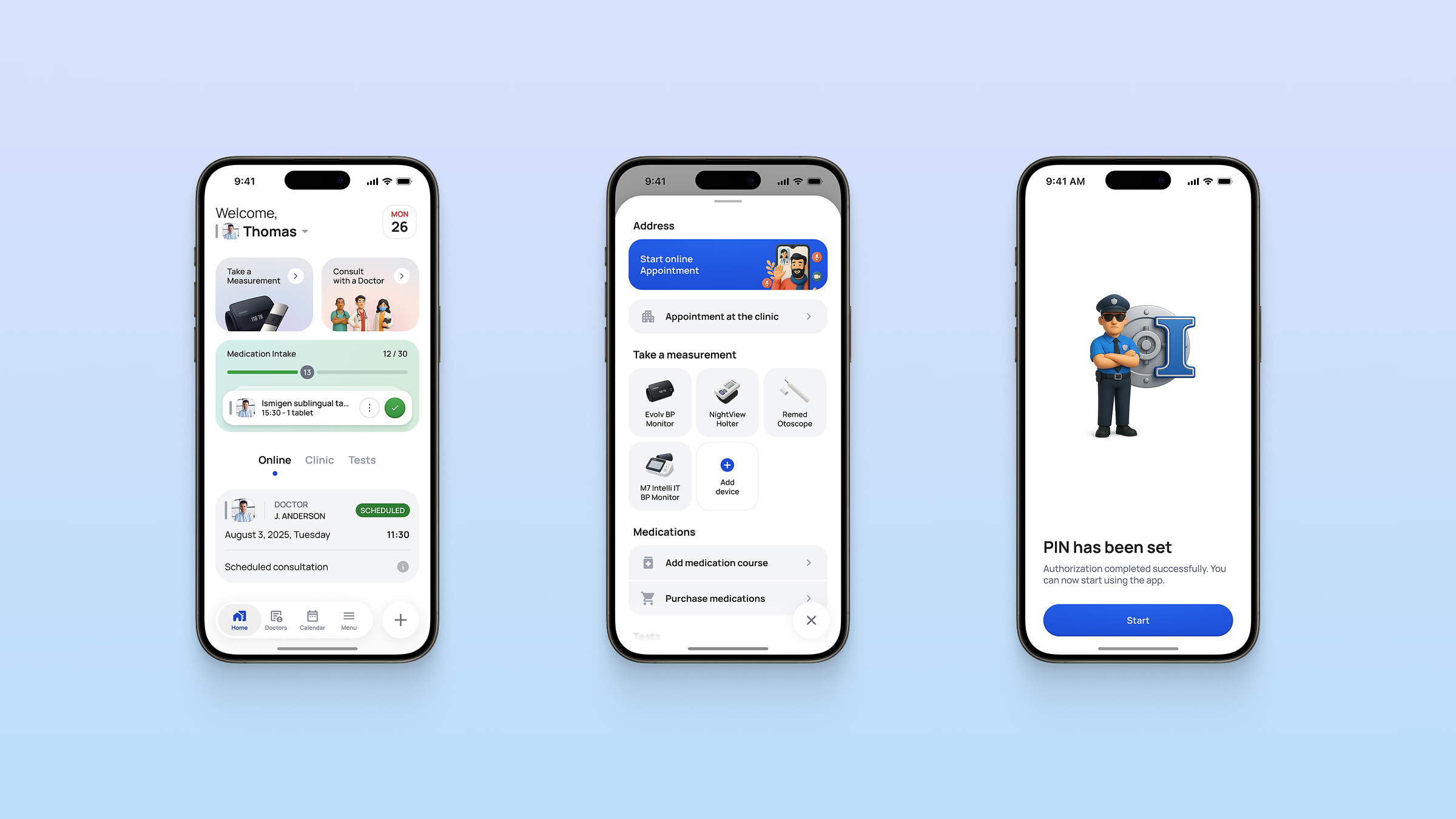
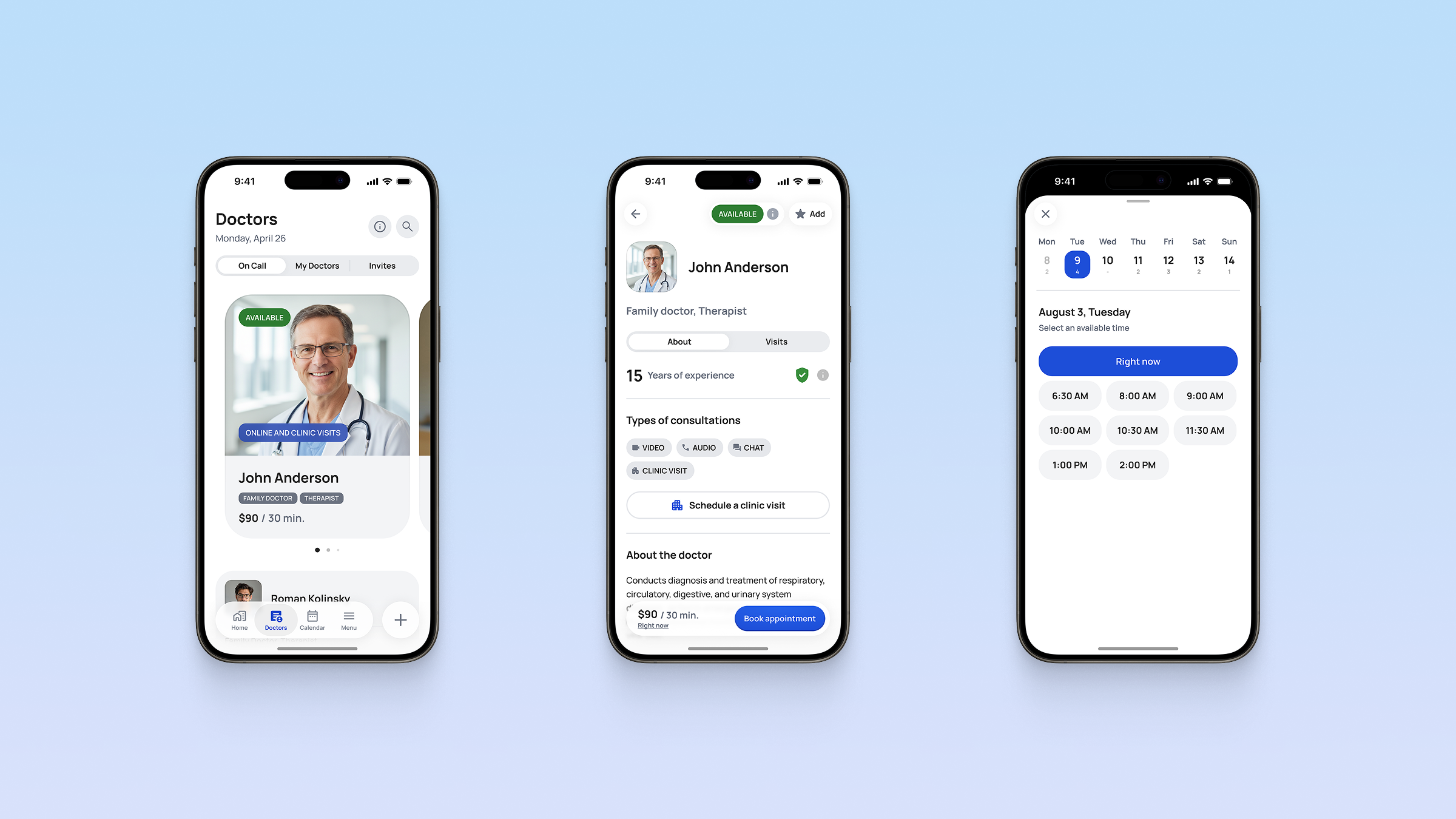
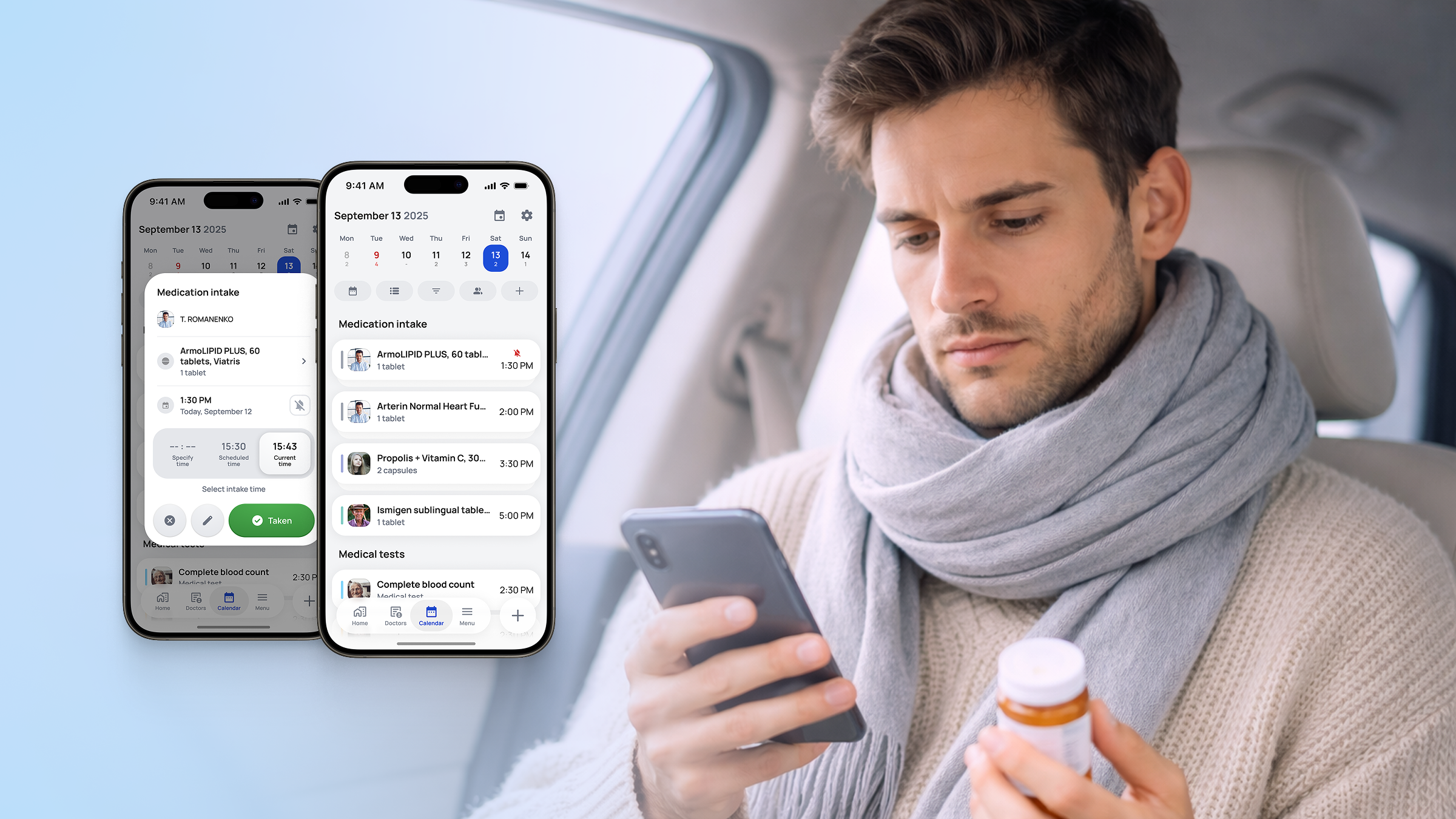
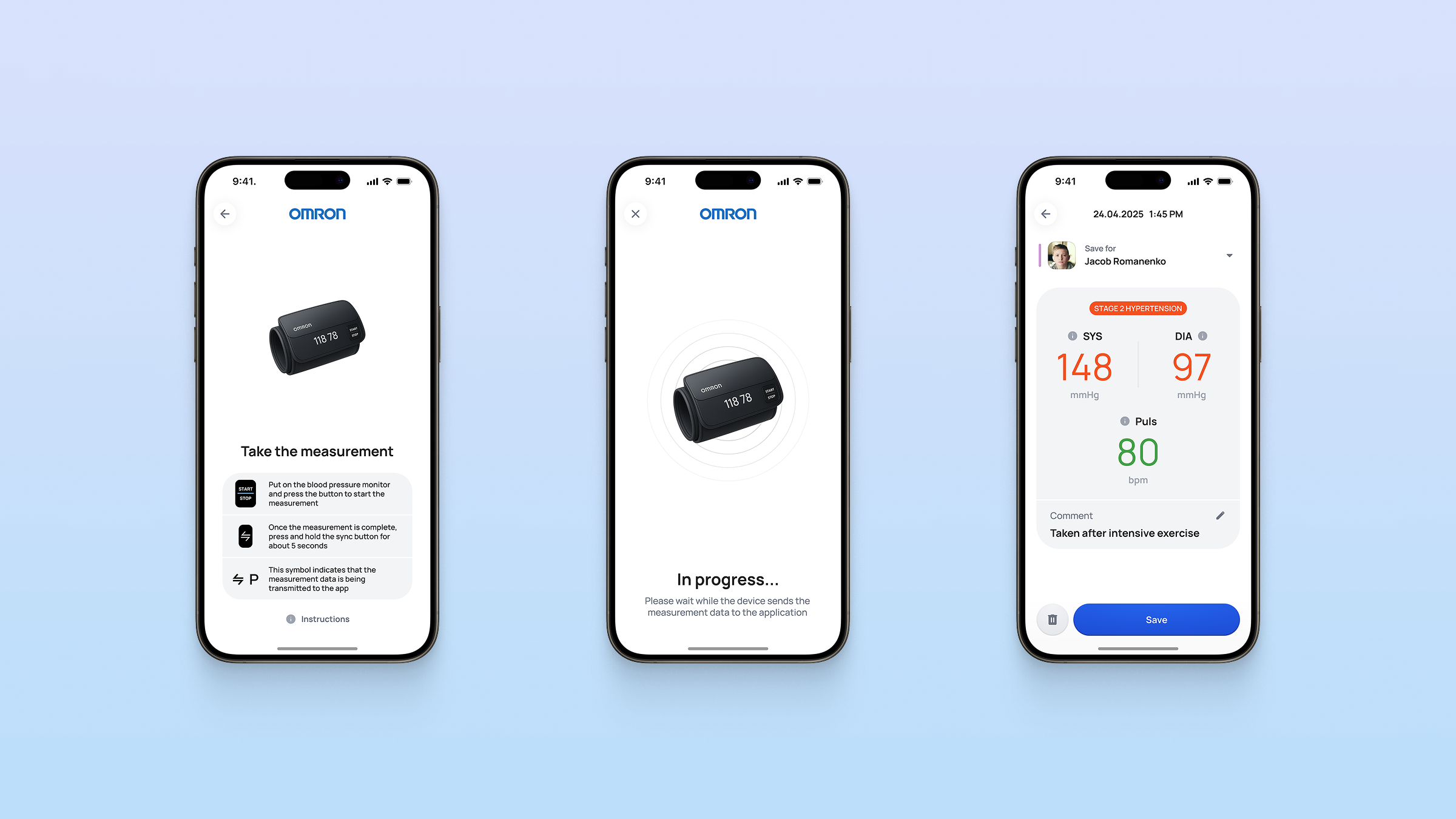
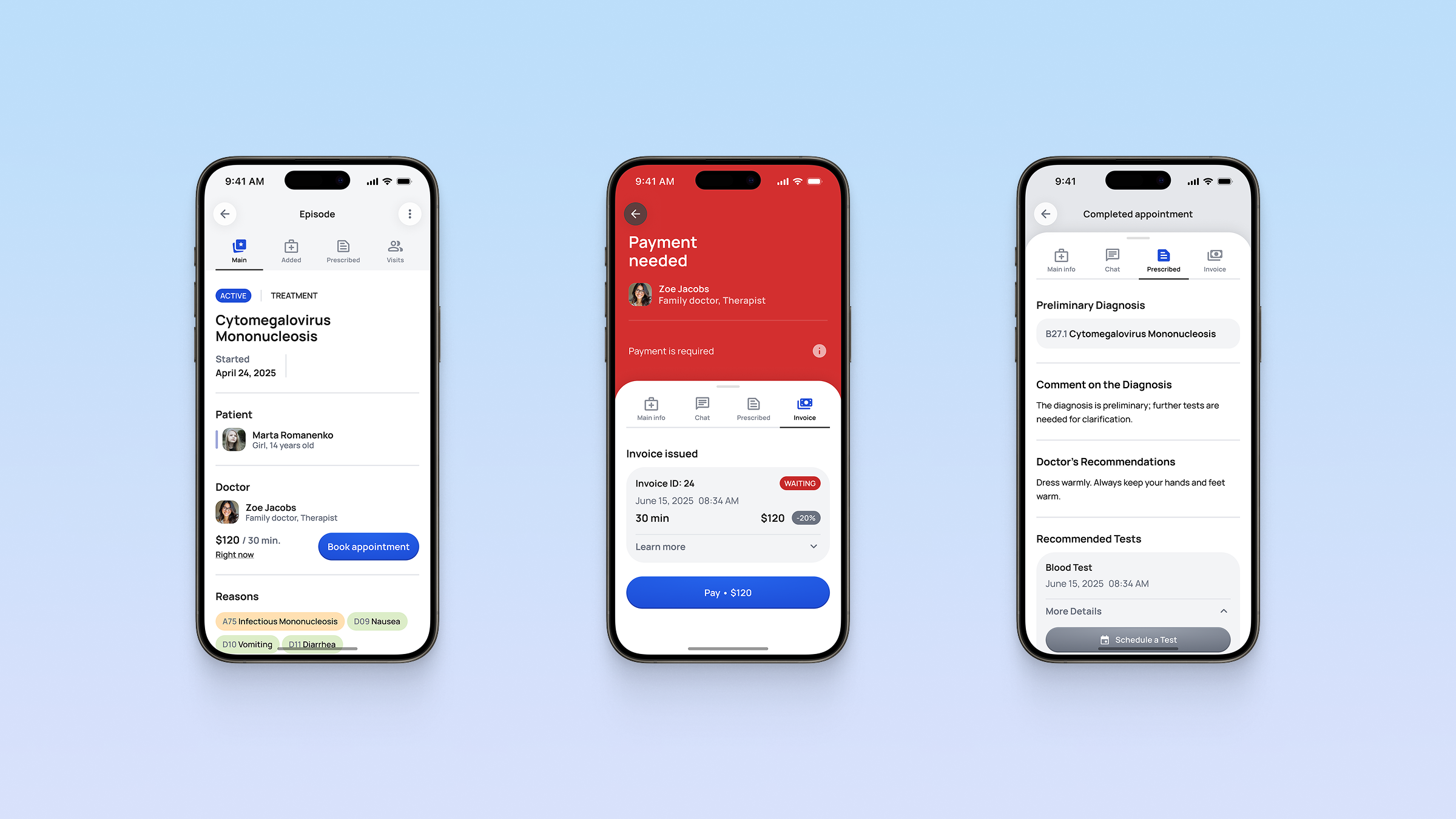
A mobile app designed for people managing their health, offering a wide range of features - from telemedicine consultations to medication tracking and integration with mobile medical devices.


Problem Statement
Patients often struggle to maintain consistent follow-up care after initial treatment. When mild or recurring symptoms reappear, many delay or avoid visiting a doctor due to time constraints, inconvenience, or the belief that the issue is not serious enough.
Solution Overview
We developed a mobile telemedicine app that enables patients to easily monitor symptoms and access medical support without the need for in-person visits. The app supports timely follow-ups, reminders, and quick consultations, helping patients stay engaged with their treatment even when symptoms feel minor.
Developed application strengthened long-term patient engagement and opened new revenue streams through digital consultations
Design process
During the design process I focused on solving real clinical and patient needs through close collaboration with stakeholders, iterative prototyping, and continuous validation.
01 Discovery & Problem Definition
Understanding the business goals, user needs, and constraints. This stage includes stakeholder interviews, user research, data analysis, and defining the core problem to solve.
02 Research & Insights
Deepening understanding of users and context through qualitative and quantitative research. Insights are synthesized into personas, journeys, and opportunity areas that guide design decisions.
03 Ideation & Concepting
Exploring multiple solution directions through sketches, flows, and low-fidelity concepts. The focus is on solving the problem effectively before committing to detailed design.
04 Information Architecture & UX Design
Structuring content, defining user flows, and designing wireframes. This step ensures clarity, usability, and logical navigation across the product.
05 UI Design & Prototyping
Translating UX into polished visual interfaces aligned with the brand. Interactive prototypes are created to validate interactions, usability, and overall experience.
06 Validation, Handoff & Iteration
Testing designs with users and stakeholders, refining based on feedback, and preparing assets and documentation for development. The product continues to evolve through iteration after launch.

Curious about what we could build together? 💬 Let’s talk.
Email me
Connect with me
Serge Krush
Cases
About
Resume
Designing the Telemedicine Experience
2021-2025
Healthcare
A mobile app designed for people managing their health, offering a wide range of features - from telemedicine consultations to medication tracking and integration with mobile medical devices.
Problem Statement
Patients often struggle to maintain consistent follow-up care after initial treatment. When mild or recurring symptoms reappear, many delay or avoid visiting a doctor due to time constraints, inconvenience, or the belief that the issue is not serious enough.
Solution Overview
We developed a mobile telemedicine app that enables patients to easily monitor symptoms and access medical support without the need for in-person visits. The app supports timely follow-ups, reminders, and quick consultations, helping patients stay engaged with their treatment even when symptoms feel minor.
Developed application strengthened long-term patient engagement and opened new revenue streams through digital consultations
Design process
During the design process I focused on solving real clinical and patient needs through close collaboration with stakeholders, iterative prototyping, and continuous validation.
01 Discovery & Problem Definition
Understanding the business goals, user needs, and constraints. This stage includes stakeholder interviews, user research, data analysis, and defining the core problem to solve.
02 Research & Insights
Deepening understanding of users and context through qualitative and quantitative research. Insights are synthesized into personas, journeys, and opportunity areas that guide design decisions.
03 Ideation & Concepting
Exploring multiple solution directions through sketches, flows, and low-fidelity concepts. The focus is on solving the problem effectively before committing to detailed design.
04 Information Architecture & UX Design
Structuring content, defining user flows, and designing wireframes. This step ensures clarity, usability, and logical navigation across the product.
05 UI Design & Prototyping
Translating UX into polished visual interfaces aligned with the brand. Interactive prototypes are created to validate interactions, usability, and overall experience.
06 Validation, Handoff & Iteration
Testing designs with users and stakeholders, refining based on feedback, and preparing assets and documentation for development. The product continues to evolve through iteration after launch.
Curious about what we could build together? 💬 Let’s talk.
Email me
Connect with me
Serge Krush
Cases
About
Resume
Designing the Telemedicine Experience
2021-2025
Healthcare
A mobile app designed for people managing their health, offering a wide range of features - from telemedicine consultations to medication tracking and integration with mobile medical devices.
Problem Statement
Patients often struggle to maintain consistent follow-up care after initial treatment. When mild or recurring symptoms reappear, many delay or avoid visiting a doctor due to time constraints, inconvenience, or the belief that the issue is not serious enough.
Solution Overview
We developed a mobile telemedicine app that enables patients to easily monitor symptoms and access medical support without the need for in-person visits. The app supports timely follow-ups, reminders, and quick consultations, helping patients stay engaged with their treatment even when symptoms feel minor.
Developed application strengthened long-term patient engagement and opened new revenue streams through digital consultations
Design process
During the design process I focused on solving real clinical and patient needs through close collaboration with stakeholders, iterative prototyping, and continuous validation.
01 Discovery & Problem Definition
Understanding the business goals, user needs, and constraints. This stage includes stakeholder interviews, user research, data analysis, and defining the core problem to solve.
02 Research & Insights
Deepening understanding of users and context through qualitative and quantitative research. Insights are synthesized into personas, journeys, and opportunity areas that guide design decisions.
03 Ideation & Concepting
Exploring multiple solution directions through sketches, flows, and low-fidelity concepts. The focus is on solving the problem effectively before committing to detailed design.
04 Information Architecture & UX Design
Structuring content, defining user flows, and designing wireframes. This step ensures clarity, usability, and logical navigation across the product.
05 UI Design & Prototyping
Translating UX into polished visual interfaces aligned with the brand. Interactive prototypes are created to validate interactions, usability, and overall experience.
06 Validation, Handoff & Iteration
Testing designs with users and stakeholders, refining based on feedback, and preparing assets and documentation for development. The product continues to evolve through iteration after launch.
Curious about what we could build together? 💬 Let’s talk.
Email me
Connect with me